You see shad and bluegill everywhere in your favorite lake, but the bass refuse your offerings. That sinking feeling happens to most Florida anglers at least a few times each season. The real problem isn’t that there’s no food in the water. It’s that you’re likely targeting the wrong prey. According to Florida Fish and Wildlife Conservation Commission research, bass feeding behavior shifts dramatically based on seasonal availability and water conditions, yet 70 percent of recreational anglers continue casting the same lure patterns regardless of what’s actually in the water column. Here’s how dedicated Florida bass anglers can catch more fish using practical, evidence-based strategies that account for forage switching and selective feeding behavior.
Understand how bass switch prey preferences throughout the year. Florida bass don’t stick to one forage item. In spring, they’ll chase bluegill and other panfish during spawning season when those species are shallow and vulnerable. By summer, when water temperatures exceed 80 degrees, bass shift focus to shad, which provide more efficient nutrition during periods of high metabolic demand. NOAA data on Florida’s thermal cycles shows that largemouth bass in the southeastern United States follow predictable seasonal migration patterns tied directly to prey availability. In fall, crawfish become a primary forage as shad move deeper, and frogs enter the equation as water cools into the 60s and 70s. Pay attention to what forage species are most active in your target water at the specific time of year you’re fishing. Call local tackle shops or check recent catch reports through the FWC website to identify which prey item should dominate your lure selection.
Match the exact color, flash, and action of the forage you’re targeting. The color conundrum frustrates anglers because matching the hatch isn’t just about getting the general silhouette right. Water clarity plays a critical role in how much flash and contrast your lure should exhibit. In clear water lakes, natural colors like green pumpkin, natural shad, or brown crawfish patterns work better because bass rely heavily on sight to hunt. In stained water with visibility under 3 feet, bright chartreuse, orange, and white patterns create better contrast and are easier for bass to locate. The size factor is equally important. USGS studies on predator-prey relationships in freshwater systems show that bass typically target forage items that represent 4 to 8 percent of their body length. A 4-pound largemouth will prefer 2 to 3 inch baits, while a 6-pounder gravitates toward 3 to 4 inch offerings. Using a bait that’s 1 to 2 inches different from the natural forage can completely kill your day because selective bass recognize the mismatch and ignore your presentation.
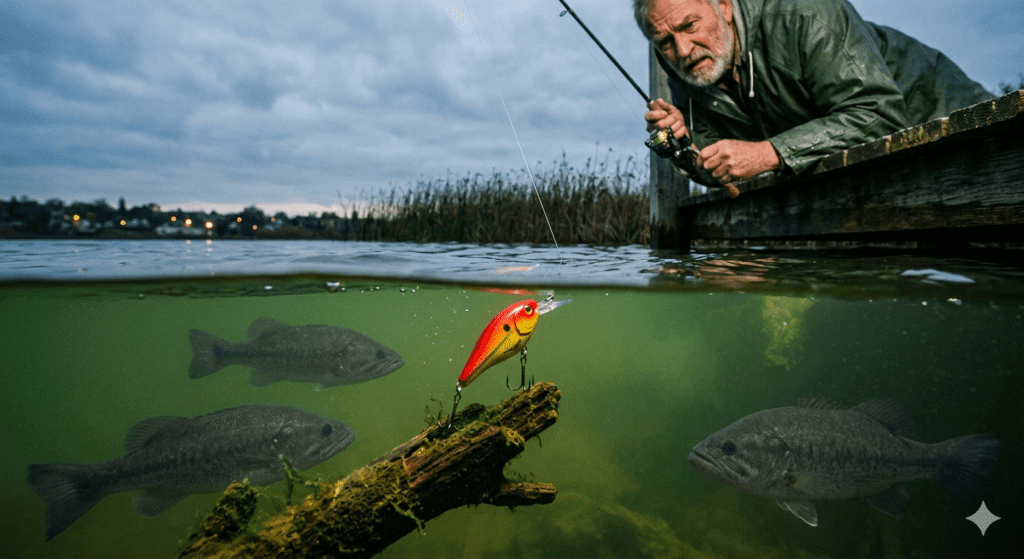
Force reaction strikes when baitfish abundance makes bass picky. The forage density trap is real. When shad are thick and readily available, bass become selective feeders. They’ve got plenty of easy meals, so they won’t chase marginal presentations. This is when you shift to high-speed retrieves and erratic action patterns that trigger an aggressive, instinctive response rather than a calculated feeding decision. Spinnerbaits with aggressive blade flutters, lipless crankbaits with rapid pulsing action, and jerkbaits with sudden directional changes force bass to strike before consciously thinking it through. According to research from Southern Illinois University on predatory fish behavior, sudden movement and flash stimulate the strike response in ways that stationary or slowly retrieved baits cannot, especially when forage is abundant. When you’re on a lake absolutely packed with shad, abandon your slow-presentation soft plastics and switch to reaction baits that demand attention through speed and vibration.
Add scent and sound cues when visual triggers fall short. The scent and sound factor often gets overlooked by anglers fixated on visual matching. Rattles inside your baits create low-frequency vibrations that bass detect through their lateral line system, effectively widening the search radius for your presentation. When water clarity is poor or conditions are overcast and dim, scent becomes equally valuable. Commercial lure coatings infused with crawfish, baitfish, or shad scent can trigger strikes in situations where bass can’t visually confirm your lure as legitimate forage. You don’t need expensive specialty products. A simple application of anise oil, crawfish extract, or even fresh cut shad onto your plastic baits costs pennies and provides sensory redundancy. The combination of proper size, correct color, realistic action, plus scent and sound gives your presentation multiple pathways to trigger a strike, even when conditions challenge visual predation.
Take action immediately by conducting a forage audit on your target lake. Contact the FWC’s fisheries office for your region and request recent electrofishing data showing forage composition and size distribution. Sample nets in your lake during your next trip and note what species, sizes, and colors dominate. Next, inventory your tackle box and ensure you have lure selections that match these forage items in natural colors and appropriate sizes. Finally, dedicate your next three outings to testing reaction baits on days when sight fishing proves unproductive, and always carry a small container of scent with you.
Understanding the baitfish paradox transforms you from a guesser into a thinking angler who preys on the bass’s own prey preferences. You stop throwing what you think should work and start throwing what you know will work based on actual forage data, seasonal timing, and selective feeding behavior. The abundance of baitfish in your lake isn’t your enemy anymore. It becomes diagnostic information that directs your tackle and technique. Share your tips and experiences in the comments section. Tell us what forage species dominate your favorite lakes and which matching strategies have worked best for you. By building this knowledge as a community, we all catch more fish and develop the kind of deep lake understanding that separates successful guides from casual anglers.