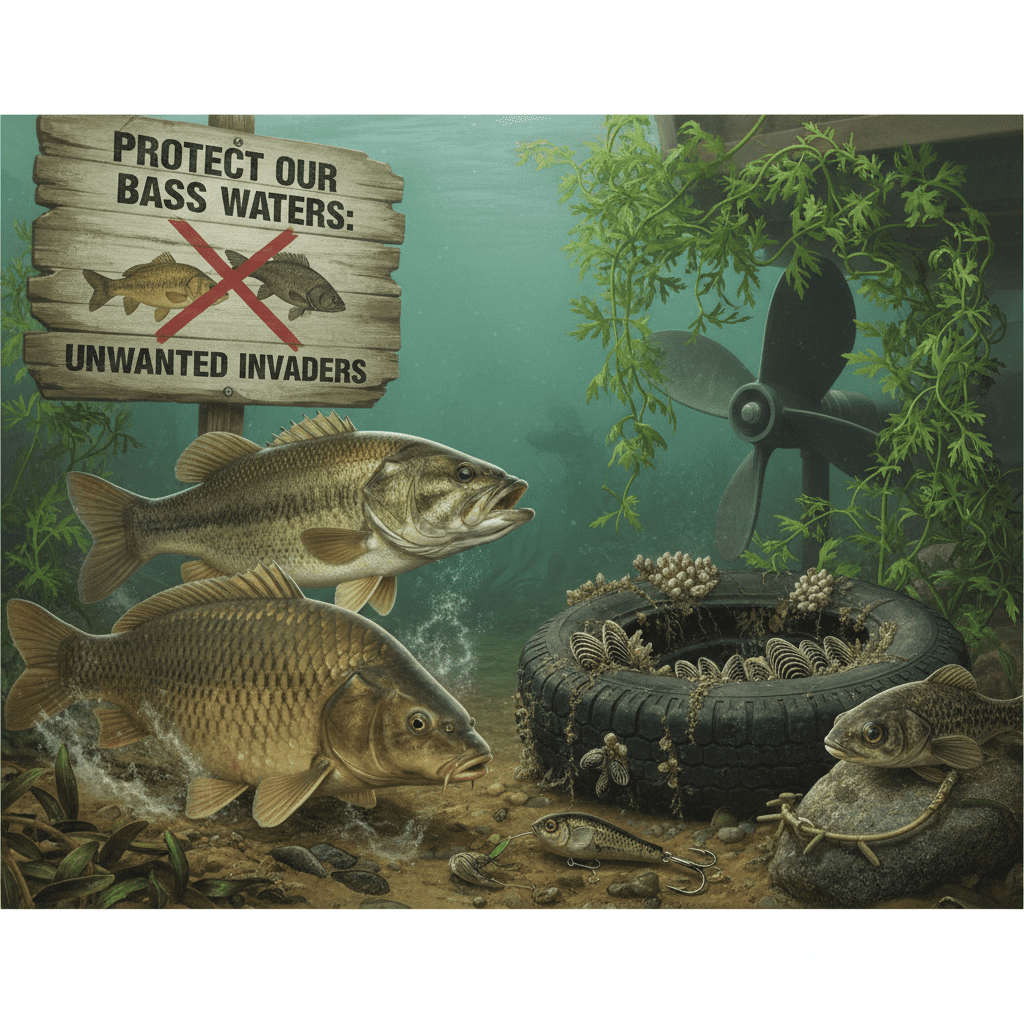
The sudden splash breaks the morning silence, a massive silver carp launching itself out of the water like a missile, a stark reminder that our beloved fishing ecosystems are under siege. According to the U.S. Geological Survey, invasive species cause over $120 billion in damages annually, with aquatic invaders wreaking unprecedented havoc on southeastern waterways (USGS, 2022). Here’s how anglers can protect our precious bass habitats with vigilant, proactive strategies.
The Invasive Species Threat Landscape
Our southeastern waterways are battlegrounds where non-native species are systematically dismantling delicate ecological balances. The Florida Fish and Wildlife Conservation Commission (FWC) reports that invasive species are now present in over 70% of Florida’s major water systems, creating catastrophic disruptions to native fish populations.
Identify the Most Dangerous Invaders
Zebra and Quagga Mussels: These thumbnail-sized destroyers can colonize a boat hull or ecosystem in weeks. A single female zebra mussel can produce up to one million offspring annually, rapidly overwhelming native species’ habitats.
Asian Carp: These aggressive fish consume up to 40% of their body weight daily, decimating plankton and disrupting food chains. In some midwestern rivers, they now constitute up to 95% of the total fish biomass (NOAA Fisheries, 2021).
Hydrilla: This aquatic plant can grow an inch per day, forming dense mats that choke waterways and reduce oxygen levels, making bass survival increasingly challenging.
Your Defensive Protocol: Clean, Drain, Dry
Clean Every Surface: Thoroughly wash your boat, trailer, and equipment with high-pressure water, removing all visible plant materials and mud.
Drain Completely: Empty all water from live wells, bilges, and cooling systems before leaving any water body. This simple step prevents microscopic larvae and plant fragments from spreading.
Dry Thoroughly: Allow all equipment to dry completely for at least 48 hours before entering another water system. Sunlight and air are natural disinfectants.
The Real-World Impact
Invasive species aren’t just an environmental problem, they’re an economic threat. The potential consequences include:
– Increased fishing regulations
– Mandatory boat inspections
– Potential lake closures
– Reduced game fish populations
Every angler can become a frontline defender against these ecological invaders. Report suspicious species to local wildlife authorities. Share your cleaning protocols with fellow anglers. Educate your fishing community about the Clean, Drain, Dry method.
Remember, protecting our waterways isn’t optional, it’s a responsibility we all share. By taking these steps, you’re not just preserving fishing access; you’re safeguarding entire ecosystems for future generations of anglers.
Share your invasive species prevention stories in the comments. Together, we can turn the tide against these unwanted invaders.