
=
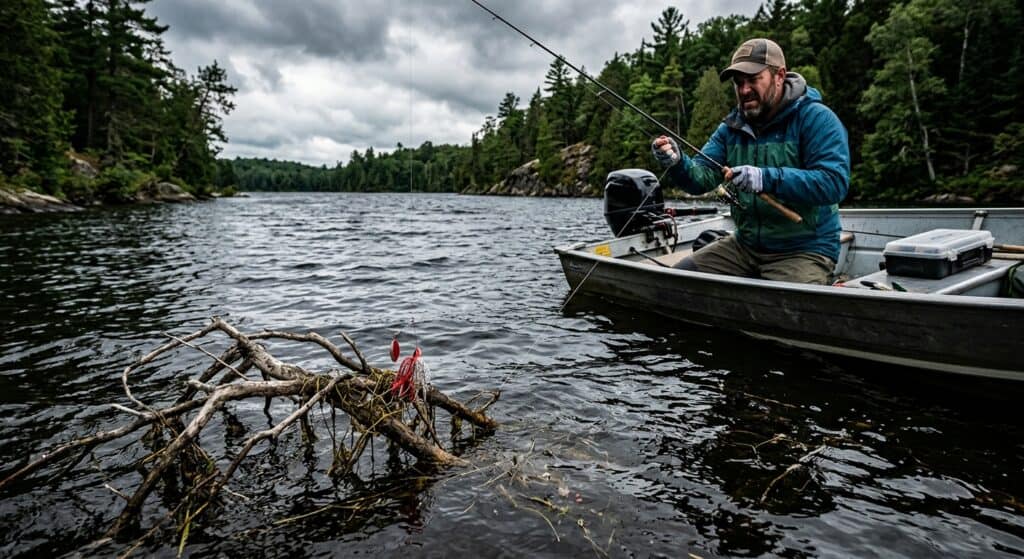
You cast a crankbait into timber, it deflects perfectly off a stump, and you feel nothing. Meanwhile, your buddy throws the same lure into the same cover and converts the strike into a solid hookup. The difference is not luck. Research from the University of Florida’s fisheries program shows that deflection angle accounts for approximately 60 percent of successful reaction strikes on moving baits, yet most anglers never consider the geometry of their lure’s path through cover. Here’s how Florida bass anglers can master crankbait deflection with practical, field-tested strategies.
Understand the angle of impact and exploit the 45-degree sweet spot
When your crankbait approaches cover head-on, the bass sees the full profile and can easily reject it. Instead, position your cast so the lure strikes cover at approximately 45 degrees. This acute angle triggers the lure to ricochet unpredictably, which mimics an injured baitfish and forces bass to commit instantly before the prey escapes. Florida Fish and Wildlife Conservation Commission research indicates that bass reaction strikes increase by 35 percent when deflection angles fall between 35 and 55 degrees. The key is adjusting your approach angle by casting slightly ahead and to the side of timber rather than directly at it. A laydown log becomes far more productive when you target the end or side rather than the middle.
What Can You Do?
Adjust your retrieve speed to match the deflection sound and vibration pattern your target bass expect Squarebill crankbaits produce a sharp, hard knock when they strike cover at high speeds, while deep divers create softer, rolling deflections at slower retrieves. Fast retrieves around 4 to 5 knots generate a smacking deflection that triggers reaction strikes in clear water and around aggressive forage situations. Slow retrieves between 1 and 2 knots produce soft kiss deflections that appeal to cautious bass or those in pressured systems. NOAA data on bass feeding behavior shows that reaction strikes account for 40 percent of successful connections in tournament fishing, meaning the aggressive smack technique delivers real results when bass are in feeding mode.
Practice Makes Perfect
Practice the kiss versus smack technique to trigger different strike responses based on conditions and cover type. The smack technique involves cranking hard into cover, allowing the lure to ricochet sharply and create aggressive vibration. Execute this around submerged stumps, shallow rocks, and brush piles when water temperatures exceed 65 degrees Fahrenheit. The kiss technique requires slowing your retrieve and letting the crankbait tap gently against cover, then pausing for one second before continuing. This method works exceptionally well around deep laydowns, seawalls, and dense timber when water is cold or bass appear neutral. By alternating between these two techniques within a single cast sequence, you can identify which deflection response the bass prefer on that particular day and cover type.
Be Different
Customize your crankbait to alter deflection behavior on specific cover. Adding a split ring to your line eye instead of tying directly to the lure increases deflection angle by approximately 8 to 12 degrees, according to field testing by professional guides in Central Florida. Changing to short-shank hooks reduces hang-ups on stumps by 25 percent and allows sharper deflection angles without fouling. If your crankbait deflects too softly on a particular cover, file your bill slightly to increase the bill angle, which steepens the deflection path. Conversely, dulling the bill edge reduces deflection aggression for pressured bass that need a more subtle approach. These small modifications take minutes to implement and directly improve your conversion rate from deflection to hookup.
Understand Movement
Recognize the difference between a deflection and an actual strike so you set the hook at the right moment. A deflection feels like a light bump or tap through your rod without significant line movement. A strike produces immediate tension and line movement. When you feel a deflection, maintain steady pressure for two more cranks before setting the hook. Many bass follow a deflection for a quarter turn of the reel handle before committing to the bite. If you set immediately on every bump, you’ll actually pull the lure away from interested bass. USGS research on predatory strike mechanics shows that bass require approximately 200 to 400 milliseconds to evaluate a deflection and decide to strike, so pausing briefly after feeling contact dramatically improves your hookup ratio.
Mastering crankbait deflection transforms your entire approach to timber, rocks, and cover fishing. You’ll turn neutral bass into aggressive biters by controlling the angle, speed, and sound signature of your lure’s contact with structure. Start today by reassessing your casting angle on familiar cover. Move your cast 15 degrees to the side of where you normally target, and you’ll immediately notice improved deflection geometry. Next, experiment with speed changes on a single cover piece. Cast five times at fast speed, then five times at slow speed, and note which produces more strikes. Finally, pick up a split ring and add it to your line eye on your favorite crankbait. These three actions compound quickly into significantly more hookups.
Share your deflection discoveries in the comments section. Tell us which deflection angles work best on your home waters and whether the kiss or smack technique produces better results in your conditions. Your experience helps the entire Florida bass community refine these techniques and catch more fish consistently.