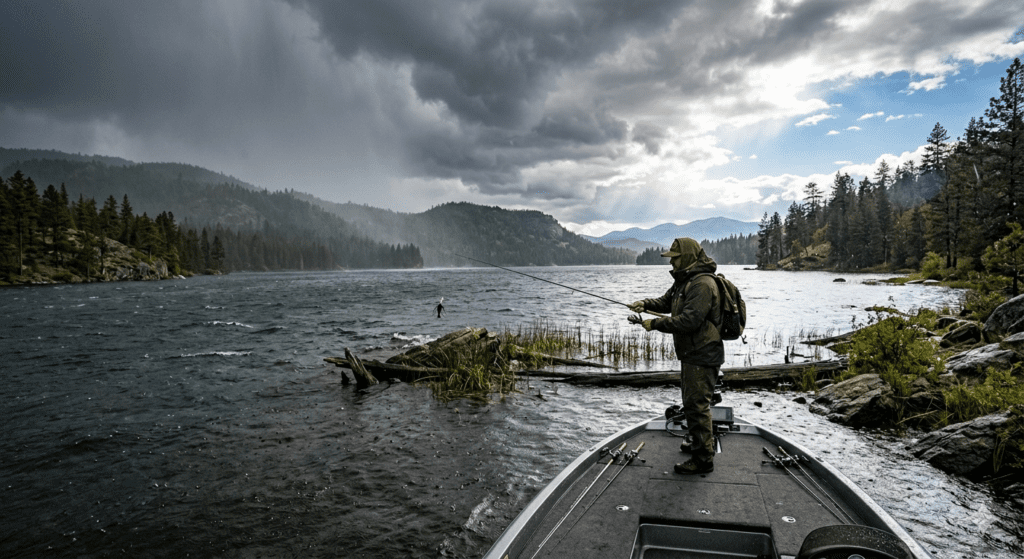
You have spent months planning a weekend trip to your favorite lake, but the forecast calls for a high pressure system moving in just before your arrival. Your stomach sinks. You have heard that fishing will be tough. But here is the secret most anglers do not talk about: weather does not ruin your fishing. Poor decisions about weather do. According to the Florida Fish and Wildlife Conservation Commission, understanding barometric pressure and light penetration can improve catch rates by up to 40 percent in the same body of water. Here is how Florida bass anglers can catch more fish with practical, data-driven strategies.
Monitor barometric pressure patterns before planning your trip
Monitor barometric pressure patterns before planning your trip
Barometric pressure directly influences bass behavior and feeding activity. When pressure drops, which happens before a cold front or storm, bass become more aggressive as they sense the incoming weather change. The FWC notes that bass feed more heavily in the 12 to 24 hours before a cold front arrives. Conversely, high pressure systems create stable conditions that can suppress feeding. You can download free barometric pressure apps that show hourly trends. If you see pressure dropping, plan your outing for that window. If high pressure dominates, expect slower presentations and deeper structures to hold fish. Check your app the night before and again that morning. This simple habit takes five minutes but gives you critical insight into what the bass are thinking.
Adjust your presentation strategy based on light penetration and water clarity.
Sunny days create higher light levels that push bass deeper and toward cover. On bright days, focus your efforts on shaded areas like dock pilings, cypress trees, or deeper ledges where bass retreat. Florida’s clear spring-fed lakes present different challenges than tannic, stained water. NOAA data indicates that in clear water conditions, bass retreat to depths of 8 to 15 feet more often than in stained water. For sunny days, throw darker colored soft plastics in black or purple that create silhouettes. Overcast and cloudy conditions do the opposite. Cloud cover reduces light penetration, making bass more likely to roam shallower areas and hunt actively across flats. On these days, use lighter colored baits like whites, silvers, and chartreuse that provide better visibility in reduced light. The transition from sun to clouds often produces the most aggressive feeding window of the day, sometimes lasting just 30 to 45 minutes. If clouds are rolling in during your trip, that is your signal to position yourself in productive shallow areas and be ready.
Fish rain and storms with the right expectations and lures
Rain and approaching storms create ideal conditions because they further reduce light, cool water temperatures slightly, and trigger bass to feed before pressure changes. The FWC has documented increased bass activity during light rain and the hours before storm arrival. However, once lightning becomes a safety concern, you must leave the water immediately. Never sacrifice safety for fish. On rainy days when conditions are safe, throw reaction baits like crankbaits and topwater plugs that create vibration and noise. Bass rely more on lateral line detection when visibility drops, so lures that produce vibration and sound become more effective. Darker colors also work well. After a storm passes and pressure stabilizes, expect a slowdown lasting 12 to 24 hours. This is when you shift to slower presentations like Texas-rigged soft plastics or jigs along bottom structure. Patience becomes your advantage during the post storm period because fewer anglers are out, giving you prime access to fish.
Understand wind as both an asset and obstacle depending on direction and strength
Wind creates wave action that increases oxygen at the surface and reduces light penetration, both factors that encourage bass to feed in shallower water. Moderate winds between 8 and 15 miles per hour often create excellent conditions. However, direction matters significantly. If wind is pushing water into a windward bank, that bank receives more oxygen-rich water and typically holds more active fish. Position yourself on the windward side of the lake or structure. Wind against the current, whether that is outflow from a dam or natural current, creates an even more concentrated feeding zone. Use this to your advantage by targeting these high-probability areas. Strong winds exceeding 20 miles per hour become difficult to fish and reduce casting accuracy. Plan your positioning and use heavier lures that cut through wind more effectively. South and east winds tend to produce better bass activity in Florida lakes compared to north or west winds, though this varies by location. Check wind direction the evening before and plan your fishing zones accordingly.
Avoid three common mistakes that cost Florida anglers fish
First, do not assume bad weather means bad fishing. Pre-storm conditions with dropping pressure are often prime time. Second, do not ignore water temperature. Bass metabolism slows significantly below 50 degrees and above 90 degrees. Use a quality thermometer to check temperature at the surface and at depths where you expect bass to hold. The USGS tracks seasonal water temperatures across Florida lakes, which you can reference when planning trips. Third, do not stick with the same lure choice all day. If conditions change, your lure selection should change too. Many anglers throw the same bait all day regardless of sun position, cloud cover, or time. This is a recipe for a slow day. Treat your lure box as a toolbox with specific tools for specific conditions.
Make immediate on-the-water adjustments using this framework
When you arrive at the lake, spend the first 15 minutes observing. Check the sun position and cloud cover. Feel the wind direction and intensity. Note the water clarity by looking at your line visibility at arm’s length below the surface. Then ask yourself three questions: Is light increasing or decreasing? Is pressure rising or falling? What is the wind direction? Your answers guide your lure selection and location choice. Start in areas that match your observations. If sun is high and pressure is rising, go deep and shaded. If clouds are building and pressure is dropping, position yourself on shallow flats near structure. If wind is pushing into a particular bank, fish that bank. These simple observations take five minutes and replace guessing with strategy.
Understanding weather patterns transforms frustrating trips into productive days. Weather is not your enemy. It is information. Bass respond to pressure, light, water temperature, and wind in predictable ways documented by researchers and confirmed by thousands of guides and anglers. The anglers catching fish consistently are not the ones with fancy boats or expensive rods. They are the ones reading conditions and adapting. You now have the framework to do the same.
Start using this approach on your next outing. Download a barometric pressure app tonight. Check weather and pressure trends the evening before your trip. Arrive at the water with a specific plan based on conditions rather than habit. Adjust your lure choice and location within the first hour based on what you observe. Share your results and your own weather-related tips in the comments section below. What weather conditions have you found most productive on your favorite water? Your experience helps other anglers in our community fish smarter and enjoy more success.