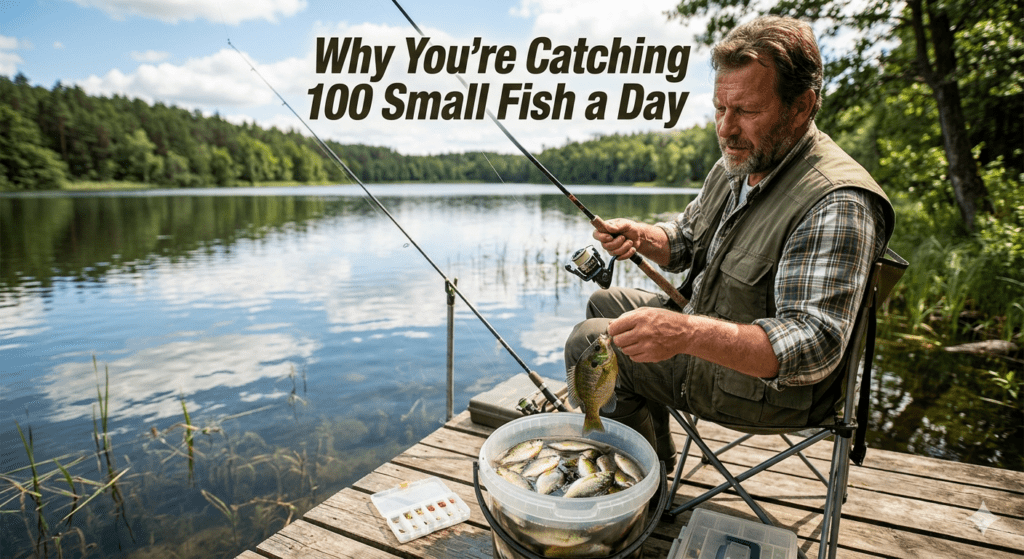
You’ve found what seems like a dream pond. Every cast brings a strike. You’re landing 50 to 100 bass per day and feeling like a fishing wizard. Then reality hits hard. Every single fish is 7 to 12 inches long, thin-bodied, and refusing to grow. You rarely see small bluegills, and bigger bass are practically extinct. What you’re dealing with isn’t great fishing. It’s a population disaster. According to the Florida Fish and Wildlife Conservation Commission, stunted bass populations occur in approximately 15 to 20 percent of Florida’s small private ponds and lakes where management practices are absent. Here’s how pond owners and bass anglers can transform a stunted bass population into a thriving fishery with practical, long-term strategies.
Understand the signs of a stunted population
When you catch dozens of bass that all look like clones of each other, you’re not looking at success. You’re looking at competition gone wrong. These fish have what biologists call a “sunken belly” appearance. Their heads look oversized relative to their bodies, and their growth rates have essentially stalled. The problem isn’t the fish. It’s the food supply. Too many bass are competing for too few prey fish. When a pond contains 500 or 600 bass and only enough forage to feed 100 or 150, every fish loses. None of them grow. None of them thrive.
Identify the root causes before you fix anything
The primary culprit in most stunted situations is overharvest of larger bass. Anglers or previous owners removed all the quality-sized fish while leaving the small ones to spawn and multiply unchecked. A pond that once produced 3 to 4 pound fish gets depleted of those breeding adults. The small ones take over, and within a few years, the entire population becomes compressed into that 7 to 12 inch range. Another major cause is excessive cover. Too much aquatic vegetation or brush gives young bass perfect hiding spots. Survival rates of juvenile bass skyrocket because predation pressure from larger fish never develops. Finally, inadequate forage fish populations seal the deal. If your bluegill population is weak or your shad stocks are depleted, there simply isn’t enough food to support the predator load that exists.
Practice aggressive removal of small bass to thin the herd
This is the single most important and most difficult step. According to fisheries research from the University of Florida’s Institute of Food and Agricultural Sciences, removing 10 to 25 pounds of small bass per acre per year is necessary to restore balance. Here’s what that means in real terms. On a one-acre pond, you’re looking at removing 30 to 50 small bass depending on their average size. You must keep these fish, not release them back into the water. This isn’t catch and release. This is culling. Many anglers struggle emotionally with this step because it feels wrong to keep so many fish. But this removal is precisely what allows the remaining bass to access adequate food and grow to their genetic potential. Plan to repeat this process for two to three years minimum. You won’t see dramatic changes in year one, but by year two and three, the remaining bass will have noticeably better body condition and faster growth rates.
Resist the temptation to simply stock more baitfish
Many pond owners think the solution is to dump in bluegill or shad fingerlings. This approach fails because the massive horde of hungry, competing small bass will devour the new forage almost immediately. You’re spending money on a temporary solution while ignoring the underlying problem. The stunted bass population remains intact and continues to suppress growth. Instead, coordinate your forage stocking with your removal program. As you reduce the number of bass, you create room for forage populations to expand naturally or through strategic stocking. Focus stocking efforts on the second or third year of your management plan when the bass population has already been reduced.
Suplement your removal efforts with strategic structure placement
While you’re thinning the herd, add brush piles in the deeper sections of your pond, typically 8 to 12 feet deep. These structures create safe zones for forage fish, particularly bluegill and shad. They also provide ambush points for your remaining bass to hunt more effectively. The Florida Fish and Wildlife Conservation Commission recommends placing two to three brush piles per acre in ponds smaller than 5 acres. Use freshly cut trees or create artificial structures from PVC pipe and branches. Position them away from the shallows where young bass congregate. This approach creates a predator prey dynamic that more closely mirrors healthy natural systems.
Accept that pond management requires patience and commitment
The payoff is substantial but not immediate. Within two to three years of consistent bass removal and forage management, your pond will begin producing 3 to 4 pound fish regularly. Growth rates on individual bass will accelerate dramatically once competition decreases. The sunken bellies disappear. The oversized heads become proportional again. You’ll start catching a mix of sizes instead of a monotonous parade of identical 10 inch fish. By year four or five, your pond will be producing fish you’re actually proud to land.
Consider whether a stunted population actually conflicts with your goals
Some anglers, particularly those who fish with children or who simply enjoy catching lots of fish without the pressure of landing trophy fish, prefer a stunted pond. If your primary objective is quantity over size, then a stunted population becomes a feature rather than a flaw. Kids catch fish constantly. The action is nonstop. There’s value in that experience. But if you’re seeking larger fish and a more balanced ecosystem, the work of thinning the herd is non-negotiable.
Start your assessment immediately if you own or manage a pond
Count how many bass you catch in a 30 minute period and estimate their sizes. If you’re consistently landing 10 to 20 fish and they’re all between 7 and 12 inches, you have a stunted population. Contact your local Florida Fish and Wildlife Conservation Commission office for a free pond assessment. They can help you develop a management plan tailored to your specific pond’s characteristics. Document your forage fish populations. Look for bluegill nests in spring. Note the sizes of bluegill you observe. Weak forage populations confirm your diagnosis.
Share your tips and experiences in the comments section. Pond management is rarely a one size fits all proposition. Your unique situation might involve different solutions or creative approaches that other anglers could benefit from learning about. Together, we can transform Florida’s stunted ponds into thriving fisheries that produce the kind of bass fishing memories that keep us coming back to the water.