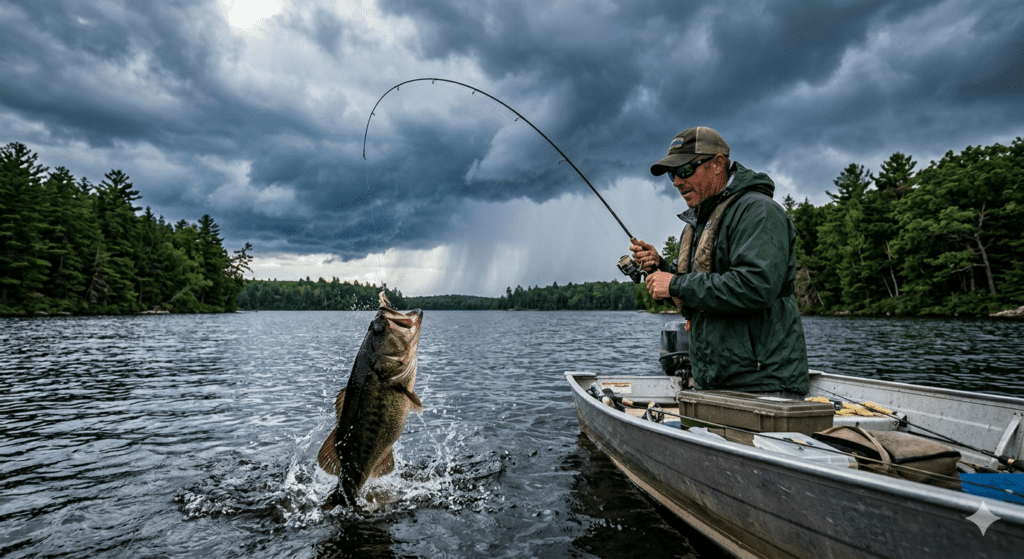
Most anglers chase the storm itself for better fishing, but here’s the secret that separates consistent producers from weekend warriors. The real bite window happens in the calm before the chaos, not during the downpour. Research from NOAA’s Atlantic Oceanographic and Meteorological Laboratory shows that barometric pressure changes trigger aggressive feeding responses in largemouth and smallmouth bass up to 12 hours before a cold front arrives. Here’s how Florida bass anglers can master storm forecasts with practical, timing-based strategies.
Understand the Pre-Front Window for Your Best Bite
The 6 to 12 hours immediately before a cold front hits represent your golden opportunity. During this window, barometric pressure drops steadily, and bass respond with predictable aggression. Studies from the University of Florida’s fisheries research program indicate that bass feeding activity increases by up to 40 percent during this pre-frontal pressure drop period. Your mistake might be waiting for the storm itself. By the time rain arrives, pressure has stabilized, and feeding has largely stopped. Instead, monitor weather forecasts religiously. When you see a cold front predicted to arrive at 2 PM tomorrow, you should be on the water by sunrise or plan an evening session starting at noon. That 6 to 12 hour window is when bass abandon caution and hunt aggressively along shallow flats and current breaks.
Recognize How Bass Sense and React to Pressure Changes
Bass possess an inner ear structure and lateral line system that detects even subtle pressure fluctuations. As barometric pressure falls, gas bladders in fish expand, creating a subtle but real physical sensation. The Florida Fish and Wildlife Conservation Commission has documented that this physiological change correlates directly with increased predatory behavior in bass populations. The last hour before a front arrives is especially crucial. During this period, bass feed with particular intensity, almost as if they sense an impending disruption. Rather than fighting this reality, capitalize on it. Plan your most aggressive presentations during that final 60 minutes before the storm breaks. This is not a time for finesse. Bass are in hunt mode, and you should match that intensity.
Shift Your Depth and Location Strategy as Pressure Drops
Falling barometric pressure pushes bass shallower, even during bright midday conditions when they normally retreat to deeper structure. This counterintuitive behavior happens because the pressure change overrides their normal light-avoidance instinct. Data from the U.S. Geological Survey’s water quality monitoring in Florida lakes shows that pre-frontal conditions can draw bass into 3 to 8 feet of water during times when they would typically hold in 15 to 25 feet. Target shallow rock piles, weed edges, downed timber in shallow flats, and the first break adjacent to deeper water. These ambush points concentrate feeding bass during the pressure drop window. Shallow coves and wind-protected shorelines also concentrate bass before storms because they offer both feeding opportunity and refuge from increasing wind and wave action.
Adjust Your Lure Presentation for Peak Feeding Conditions
When barometric pressure drops, abandon patience. This is not a time for subtle presentations or slow-moving finesse baits. Instead, deploy moving baits that cover water quickly and trigger reaction strikes. Power fishing with swimbaits, crankbaits, and spinnerbaits matches the aggressive feeding response triggered by falling pressure. Cast along shallow structure, work the lure through the strike zone with confidence, and keep moving until you locate active fish. If you prefer jigs, work them with deliberate hops and pauses rather than dragging them slowly along the bottom. The key is matching the feeding intensity. Bass in pressure drop conditions respond better to moving targets than to stationary or slowly presented baits. You might also increase your retrieval speed and lure size compared to normal conditions. Larger profiles and faster action trigger more strikes when bass are in feeding frenzy mode.
Navigate the Post-Front Shutdown and Salvage Your Day
Once the cold front passes and barometric pressure rises, expect a significant slowdown. This high-pressure period can last 24 to 48 hours, and fishing productivity often drops by 50 percent or more according to multiple FWC studies. Rather than abandoning the water, adjust your strategy. Switch to slower, more deliberate presentations with smaller lures. Move to deeper structure where bass retreat during high-pressure periods. Early morning and late evening sessions often outperform midday fishing during post-front high-pressure days. You can also target shaded areas and vegetation where bass find comfort and reduced light penetration. This is when patience returns to your game plan. Downsize your offerings, slow your presentation, and accept that fewer fish will bite. But those that do are usually quality fish willing to commit despite unfavorable conditions.
Mastering barometric pressure windows transforms stormy weather forecasts from a reason to stay home into your most productive fishing opportunities. The next time you see a cold front in the forecast, view it as an invitation rather than an obstacle. Set your alarm, monitor that pressure drop window, and position yourself to capitalize on the aggressive feeding response that only occurs during those critical 6 to 12 hours before the storm arrives. Your catch rates during these windows will far exceed your normal fishing days.
Start this week by checking the forecast for incoming cold fronts and planning your next pre-front session for that 6 to 12 hour window. Stock your tackle box with moving baits like swimbaits and crankbaits specifically for pressure drop periods. Share your own barometric pressure fishing discoveries and storm-front success stories in the comments section below. Help fellow anglers unlock this proven pattern and turn forecasts into consistent productivity.