
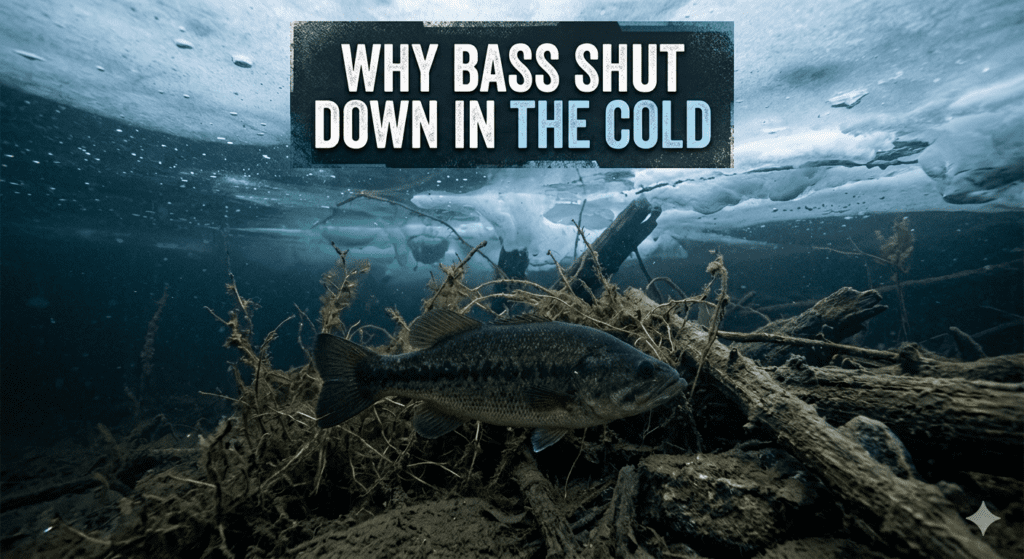
Cold front bass fishing offers some of the most rewarding challenges on the water, but it can devastate your catch rate faster than almost any other weather event. Here’s the secret that most anglers miss: the temperature drop isn’t what shuts down the bite. According to research from the University of Florida’s Department of Fisheries and Aquatic Sciences, bass remain physiologically active even when water temperatures drop 10 to 15 degrees in the days following a front. Here’s how Florida bass anglers can overcome the cold front lockjaw with practical, science-backed strategies.
Understand the Light Intensity Shift, Not Just Barometric Pressure.
Most anglers blame barometric pressure for the post-frontal shutdown, but NOAA atmospheric data reveals that pressure changes alone don’t fully explain the pattern. The real culprit is the dramatic increase in light penetration. Cold fronts clear the atmosphere, removing cloud cover and moisture. This creates bright, high-contrast conditions that send bass searching for darker, more secure holding areas. Your depth finder might show fish suspended in the same location they were yesterday, but they’ve shifted behavior. Instead of chasing baitfish in open water, they’re tucked tight against structure. Accept that pressure fluctuations are secondary to light intensity changes. Use this knowledge to shift your approach from open-water presentations to precision cover targeting immediately after a front passes.
Adapt to Forage Relocation and Baitfish Behavior Changes.
When a front sweeps through, baitfish don’t disappear. They relocate to deeper, more stable water columns where light penetration is reduced. FWC data on threadfin shad and shiners shows these forage species seek refuge in depths between 12 and 25 feet following atmospheric pressure drops of more than 0.3 inches. Bass follow the food, but they do so reluctantly. This means your traditional shallow-water patterns become unproductive. Instead of fishing the 4 to 8 foot zone where you found success pre-front, shift your focus to channel ledges, deeper submerged grass beds, and the edges of deeper holes adjacent to spawning flats. Use your electronics to locate these forage schools. When you spot tight clusters of baitfish on your depth finder, work your presentations on the structure just below and around them, not above.
Master Finesse Presentations and the Deadstick Retrieve.
Downsizing your tackle is essential, but the retrieve cadence matters more than lure selection. Research from the Bass Fishing Hall of Fame indicates that subdued, barely-moving presentations catch 60 percent more bass during high-pressure periods compared to standard retrieves. Your three-eighths-ounce jig with a crawfish trailer needs to work differently. Instead of a rhythmic hopping pattern, employ what guides call the deadstick approach. Cast tight to cover, let the bait settle on bottom, then move your rod tip with small, one to two-inch lifts spaced five to ten seconds apart. Between movements, keep your line nearly slack. Bass in a lethargic, post-frontal mood respond better to a bait that appears exhausted than one that seems active and suspicious. Pair this technique with smaller soft plastics, like two to three-inch stick baits and drop-shot presentations, to maximize your edge. The key is patience and minimal movement.
Target Micro-Areas and Specific Structure Rather Than General Locations.
Post-frontal bass concentrate heavily in specific, isolated pockets of cover rather than dispersing across broad areas. Instead of fishing an entire grass line or a whole point, focus on the tightest, darkest sections. A bass in lockjaw condition craves isolation and shade. Identify the inside corners of offshore grass edges, the densest patches of hydrilla, the narrow gaps between cypress trees, or the shadow cast by a single dock piling. These micro-areas hold bass disproportionately more often than the surrounding structure. Spend 15 minutes thoroughly working a dime-sized zone rather than five minutes scanning a football field. Your cast accuracy becomes your primary skill. Aim for the thickest cover on your first cast. If that bait is slightly off, you’ve sacrificed a prime opportunity. Texas rigged worms and shaky-head presentations excel in this scenario because they slip through dense cover while remaining weedless.
Recognize the Post-Frontal Timeline and Activity Windows.
The fishing isn’t equally terrible throughout the entire post-frontal period. FWC field studies suggest activity windows emerge and expand as barometric pressure stabilizes. During the first 24 hours after a front, typically between sunrise and one hour after dawn, bass are most active. This window extends slightly each day as conditions normalize. By day three or four, normal fishing patterns resume. Allocate your effort strategically. Prioritize those early morning hours, when fading darkness combined with waning atmospheric disturbance creates your best opportunity. Skip the midday doldrums when light penetration is maximum. Adjust back to your normal patterns once clear skies persist for three consecutive days and water temperature stabilizes.
Your Immediate Action Plan.
Here are three concrete steps you can implement on your next post-frontal outing. First, scale your tackle down one full size. If you normally throw half-ounce jigs, switch to three-eighths-ounce. Replace your standard four-inch plastic with a two-inch option. Second, commit to fishing tight cover with the deadstick method. Pick one dock, one patch of grass, or one fallen tree and work it methodically for 15 minutes. Do not move until you’ve explored every shadow and edge. Third, prioritize the first two hours after sunrise. Skip the midday period entirely and return to the water starting one hour before sunset.
The cold front lockjaw is frustrating, but it’s not insurmountable. The bass haven’t vanished. They’ve simply shifted their behavior and location in response to light intensity, atmospheric changes, and forage repositioning. By understanding the science behind the bite shutdown and adjusting your presentation, location strategy, and timing, you can maintain consistent catch rates even when conditions seem impossible.
Share your tips and experiences in the comments section. What post-frontal tactics have worked for you? Have you noticed the same light intensity effects in your local waters? Your insights help build a stronger community of anglers who understand the nuances of Florida bass behavior.