
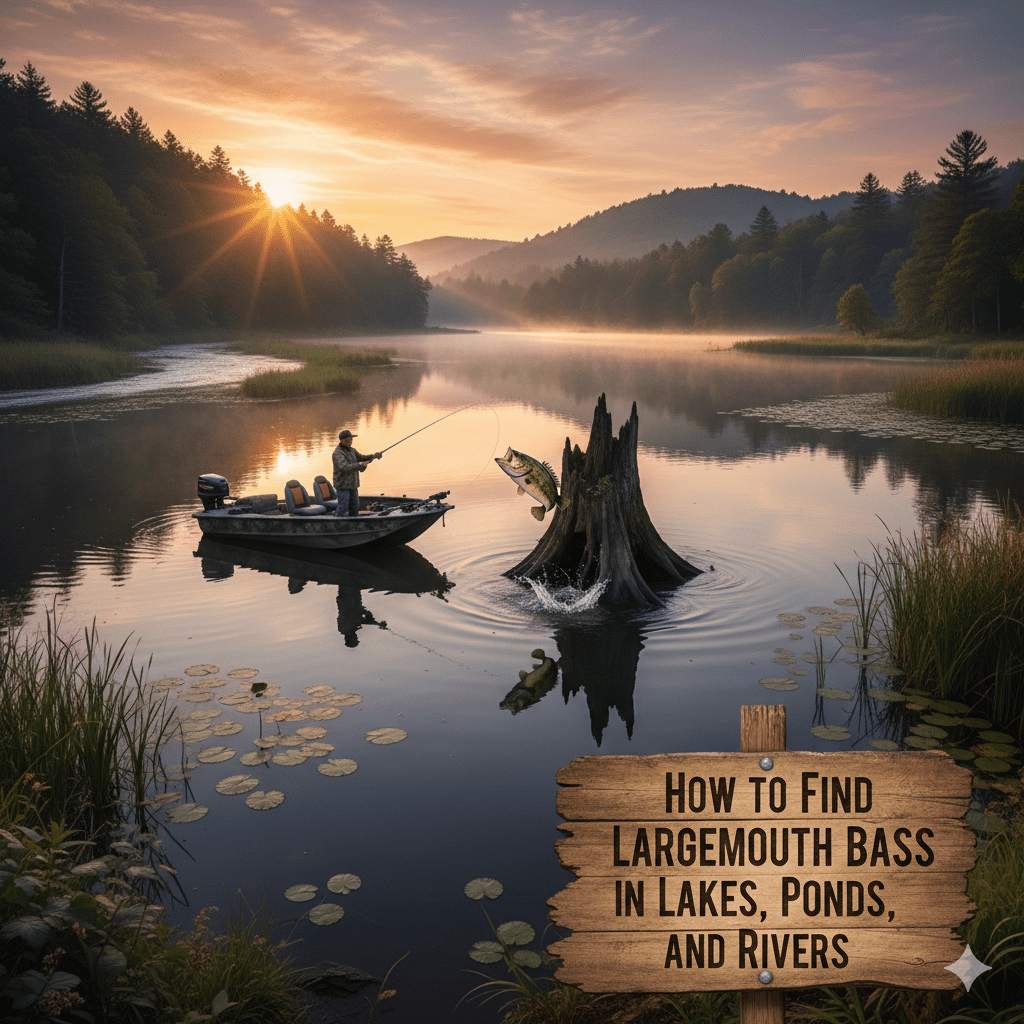
Every year, thousands of anglers spend countless hours casting blindly, hoping to stumble upon a largemouth bass. According to the Florida Fish and Wildlife Conservation Commission (FWC), there are over 1.5 million recreational anglers in Florida alone, yet many struggle to consistently locate bass. Successful bass fishing isn’t about luck, it’s about understanding fish behavior and habitat. Here’s how anglers can find largemouth bass more effectively with practical, strategic approaches.
Understand Bass Survival Needs
Bass are opportunistic predators with four critical survival requirements: cover, food, oxygen, and optimal temperature. Each of these factors drives their positioning in different water environments. The FWC reports that largemouth bass typically seek areas that provide multiple survival advantages simultaneously.
Map Key Bass-Holding Structures
Successful anglers don’t randomly cast, they strategically target specific structures where bass congregate:
1. Identify Weed Lines
Weed edges are prime hunting grounds. Bass use these transitional zones between open water and vegetation to ambush prey. Look for irregularities in weed lines, such as points, pockets, or sudden depth changes.
2. Explore Drop-Offs
Underwater drop-offs create dramatic depth transitions that bass love. These areas provide quick access to different temperature zones and feeding opportunities. Use your depth finder or consult topographical maps to locate these underwater landscapes.
3. Target Strategic Points
Land points extending into the water are bass magnets. These natural structures create current breaks, provide depth variations, and concentrate baitfish. NOAA fisheries research indicates that points with multiple depth levels attract bass throughout different seasons.
4. Investigate Man-Made Structures
Docks, laydowns (fallen trees), and artificial fish habitats offer crucial cover. Bass use these structures to hide, ambush prey, and regulate their temperature. Approach these areas quietly and cast parallel to the structure for best results.
Bass Positioning Strategies
Bass movement changes dramatically throughout the day. Morning and evening: Shallow water near cover. Midday: Deeper water or heavy cover to avoid direct sunlight. Understanding these patterns increases your catch probability.
Electronics and Observation Techniques
Read Water Without Technology
– Look for surface disturbances
– Observe bird activity
– Notice baitfish movements
– Watch for subtle water color changes
With Electronics
– Use side-scan and down-scan sonar
– Create waypoints for promising structures
– Track water temperature variations
Common Mistakes to Avoid
– Casting too far from structure
– Moving too quickly
– Ignoring subtle depth changes
– Overlooking smaller, complex structures
Steps to Take Now
1. Study local lake maps before fishing
2. Invest in basic underwater mapping apps
3. Practice reading water without electronics
4. Keep a fishing log to track successful spots
By understanding bass behavior and habitat preferences, you’ll transform your fishing from random casting to strategic hunting. Knowledge is your most powerful fishing tool.
Share your best bass-finding tips in the comments! Share with a fishing buddy who needs these insights and help them catch more fish. Tight lines!