
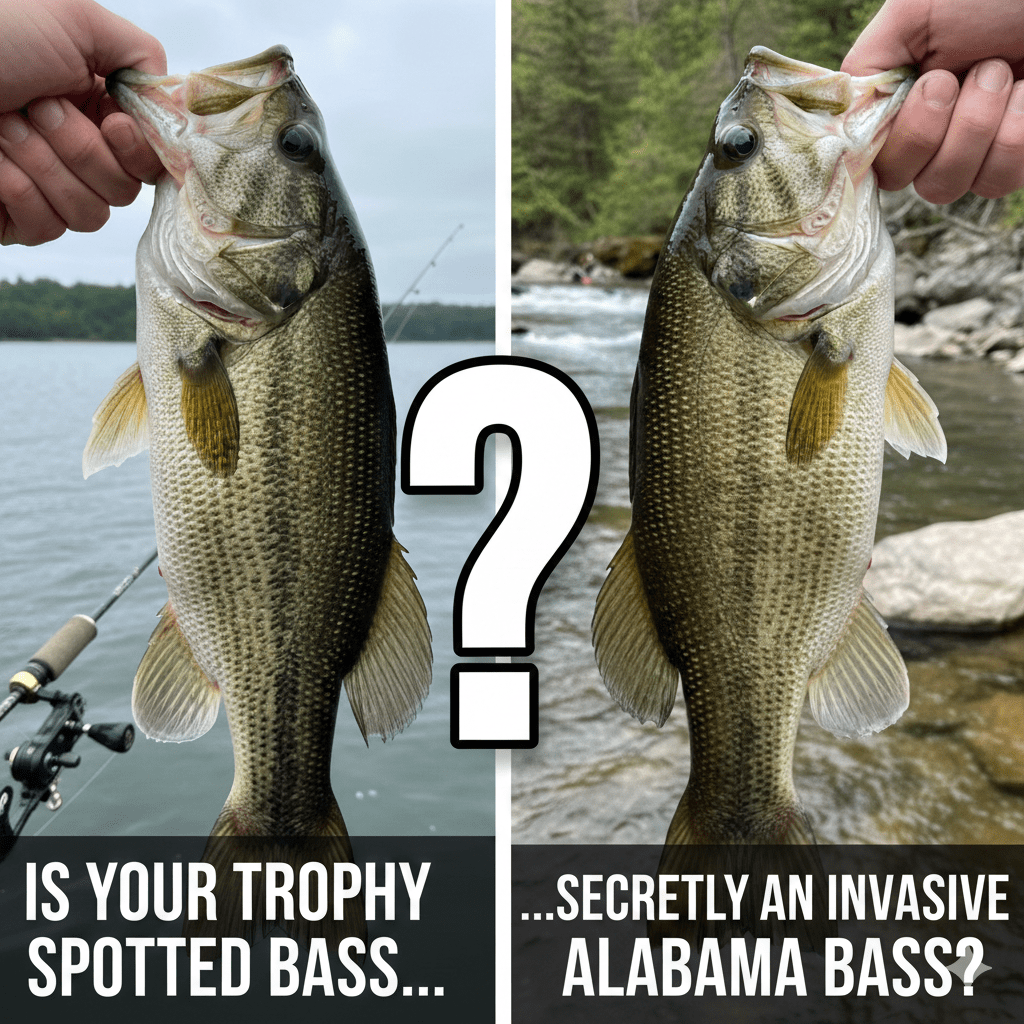
Was that trophy spotted bass you just caught actually an invasive alien species threatening our native fisheries? Many anglers are unknowingly participating in an ecological disaster that could permanently transform our bass ecosystems. According to the Florida Fish and Wildlife Conservation Commission (FWC), the Alabama bass (Micropterus henshalli) represents a silent predator infiltrating lakes and rivers across the southeastern United States. Recent studies show these aggressive invaders can rapidly hybridize with native bass populations, potentially replacing indigenous species within just a few generations.
Here’s how anglers can protect our native bass fisheries by practicing vigilant, scientifically-informed strategies.
Identify the Invader
Recognizing the Alabama bass is your first line of defense. Unlike native spotted bass, Alabama bass feature distinct characteristics: a more pronounced lateral line with 71-77 scales compared to native spotted bass, and typically more aggressive growth patterns. Biological research from the Georgia Department of Natural Resources indicates these fish can grow significantly faster than their native counterparts, giving them a competitive edge in new environments.
Understand the Ecological Impact
Case studies from lakes in Georgia and the Carolinas reveal devastating consequences. In systems where Alabama bass have been introduced, they’ve demonstrated remarkable abilities to hybridize with smallmouth bass and outcompete largemouth populations. A 2019 study published in the North American Journal of Fisheries Management documented instances where Alabama bass reduced native bass populations by up to 60% within a decade.
Prevention is Key
The most critical strategy is simple: Never move live fish between waterways. Anglers play a crucial role in preventing further spread. When you catch a fish that seems unusual, photograph and report it to local wildlife authorities. The FWC and state fisheries departments actively track invasive species movements and rely on angler observations.
Actionable Steps for Anglers
1. Learn to distinguish Alabama bass from native spotted bass
2. Photograph and report unusual fish to local wildlife authorities
3. Clean and dry all fishing equipment between water bodies
4. Never transfer live fish between different water systems
The future of our native bass fisheries depends on informed, responsible anglers. By understanding the threat of the Alabama bass and taking proactive steps, we can help preserve the delicate ecological balance of our aquatic ecosystems. Share your observations, spread awareness, and become a guardian of our native bass populations.
Remember: One transported fish can change an entire ecosystem forever.